


Aalborg University
Danemark
How Neuroscience Last Advances Can Change the Way We Conceive Microgrids - New Approaches of Artificial Intelligence for Green Energy
British Columbia University
Canada
Lessons learned from the KAHRAMANMARAŞ-TURKEY (M7.7 AND M7.6) and MARRAKECH-MOROCCO (M6.8) earthquakes
He has 177 international journal papers in SCI/SCIE and over 250 other publications, national and international research, and application projects, many journal reviewers, many conference scientific committee members and many invited speakers. He is a member of the journal and conference editorial boards. Between 2004-2007 and 2007-2013 years, he served as Head of the Department of Civil Engineering and Dean of the Faculty of Engineering at Karadeniz Technical University, respectively.
School of Computing, Edinburgh Napier University, Scotland, UK
Towards ethical, responsible and sustainable AI technologies: Real world use cases, challenges and opportunities
EMSI Director, Morocco
Sustainable Smart Cities for the acceleration of the UN SDGs
Morocco (2019), and past faculty member Science of Abdelmalek Essaadi University, Tetuan, Morocco (1993-2011).
He is IEEE Global Cities Alliance, MEA Chairman (2021-2022), IEEE Humanitarian Activities Board Projects Committee Chair and IEEE Special Interest Group on Humanitarian Activities Chair (since January 2023), IEEE EAB Teaching Excellence Editorial Hub, Member (2021-2022), and IEEE Public SafetyTechnology, Education Chair (2022). He is the founder and past Chairman of the IEEE Morocco Section (2005-2016), co-founder and chair of several IEEE OU in Morocco during the last two decades. He has authored and co-authored 10 books and more than 200 papers in international refereed journals and conferences in the field of Electrical and Computer engineering and its diverse applications. In addition, he is the founder and the General Chair / co-chair of several IEEE technically sponsored international conferences such as Information and Communication Technologies International Symposium (2005, 2007), NATO Advance Research Workshop on Information Security Assurance (2005), International Conference of Multimedia Computing and Systems series (2009-2016). He also co-organized and co-chaired IEEE Smart Cities Summit in May 2020, the US National Academies 5th Arab American Science, Engineering and Medicine Frontiers Symposium in November 2017, Rabat, Morocco and US NSF sponsored workshop on Smart Cities in January 2016 in Rabat, Morocco. He has also served in the Organizing committees and TPC and presented keynote talks at many other international conferences worldwide.
Moreover, in the framework of his position as the director of International Cooperation in the Ministry of General Affairs and Governance (Morocco), he was involved in the coordination of the World Bank Group Morocco Country Partnership Framework (2019-2024) and OECD Morocco Country Program (2019-2024) among other international cooperation programs.
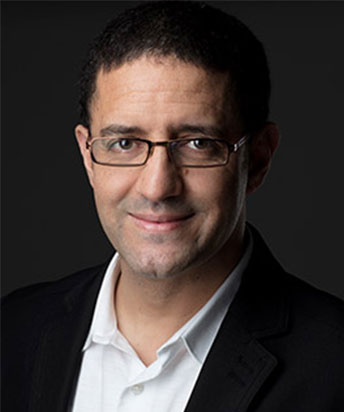
Department of Chemistry and Biochemistry
UMontreal, CANADA
Advancing Photoelectrochemical Water Splitting: Architecture Photoanode Strategies for Highly Efficient Hydrogen Production
The global dependence on fossil fuels has brought us face-to-face with a dire energy crisis and escalating environmental concerns. To address these challenges, the scientific community is focusing on the development of alternative, clean energy sources. Hydrogen stands out as a viable solution, combining high-energy capacity with environmental friendliness, making it an ideal energy carrier for the future. A promising avenue for hydrogen production is through photoelectrochemical (PEC) water splitting, which leverages solar energy to generate hydrogen fuel in a cost-effective and sustainable manner. This talk delves into the innovative architecture and approaches in PEC water splitting, spotlighting the use of one-dimensional (1D) cadmium sulfide (CdS) or BiVO4 nanoarrays as photoanodes. Despite their advantageous band structure and photoelectronic properties, CdS or BiVO4 nanoarrays face challenges like rapid recombination of charge carriers and photocorrosion, which hinder their practical application. First, I will discuss on the design of 1D CdS-based nanojunctions-employing Type-I, Z-scheme, and plasmon-enhanced heterostructures to address these issues and achieve a significant boost in PEC performance through improved photon management and quantum efficiency. Second, I discuss on the architecture of BiVO4/MoS2 nanoarray photoanode to improve charge separation and hole extraction towards efficient photoelectrochemical water splitting. This talk will not only shed light on the underlying enhancement mechanisms and charge transfer pathways of these advanced PEC systems but will also highlight the promise these strategies hold for the evolution of hydrogen production technologies, positioning them as front-runners in the transition toward a greener and sustainable energy future.
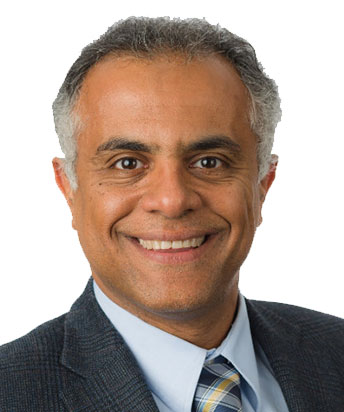
Mohamed HEGAB
Professor & Chair of Civil Engineering & Construction Management
California State University Northridge, USA
EMERGING TRENDS IN CONSTRUCTION DISPUTE RESOLUTION: Integrating Technology & Collaboration for The Future
Dr. Mohamed Hegab is a visionary in the realms of strategic development and business leadership. With a keen ability to identify and weave together opportunities within organizations, he excels in catalyzing growth and driving impactful business advancements. His leadership style is both captivating and grounded, seamlessly blending inspiring narratives with a robust foundation in financial acumen.
Boasting nearly three decades in the industry, Dr. Hegab has amassed a diverse portfolio managing project controls, claims on various project scales, and sectors from public to commercial construction endeavors. He is especially renowned for his profound expertise in project scheduling, claim analysis, negotiations, and dispute resolution. His talents further extend to productivity analysis, business process reengineering, and the establishment of two innovative companies specializing in project management and software development.
At the heart of his academic and professional contributions stands the construction management program he pioneered at California State University Northridge. At various junctures, Dr. Hegab has been the driving force behind most of the program's courses, specializing in areas like scheduling, estimating, project management, and contracts. His illustrious academic journey is marked by the authorship of over 40 pivotal technical papers and four seminal books in the sphere of construction management.
Since 2005, he has honorably served as a senior ABET evaluator for civil and construction programs, further solidifying his reputation in the academic world.
In addition to his roles in academia and industry, Dr. Hegab proudly served as the former president of the Association of Egyptian-American Scholars. He is currently steering the path of excellence as the department chair of the Civil Engineering and Construction Management at California State University Northridge.

MBA
Co-Founder and CEO of Wisp Energy, USA
Cutting-Edge Advancements in Green Wind & Oceanic Energy Production
(i) advances in sustainable energy,
(ii) innovations in green energy production and storage, and
(iii) lowering the levelized cost of sustainable energy (LCOE).
The presentation will provide a deep dive into technical intricacies that promise not only to reshape our understanding but also redefine the benchmarks of renewable energy.
Mr. Scott Jewett is a seasoned innovator and entrepreneur with a portfolio of 17 patents across a diverse range of industries including energy, oil & gas, and defense. He is the Founder and CEO of Wisp Energy, a groundbreaking R&D firm specializing in renewable energy. Under his leadership, the company synthesized innovation, business strategy, and intellectual property to solve complex engineering challenges. His prowess in implementing rapid growth strategies is well-documented, with key projects for global companies like BP Oil, Limited Brands, and Tyco. He founded Wisp Energy, a renewable energy IP company that was approved for a full proposal with the US National Science Foundation for a development grant and was selected as an honorary inductee in Florida Atlantic University’s Technology Incubator Program in 2023.
A trusted voice in the technical community, Scott has spoken at U.S. Congressional Military Subcommittees and served on government panels. His notable projects include developing force mitigation systems for the Pentagon after 9/11, inventing the world’s only direct-drive variable transmission for renewable energy, and designing advanced ballistic composites for the U.S. military.
Scott has also been a driving force in the commercial sector. He innovated patented solutions for BP and Shell Oil, contributed to disaster relief through deployable building systems, and even revolutionized consumer products with a patented wick for candles that emit zero toxins.
Scott's business acumen is equally impressive. He is responsible for the strategic expansion of PAXCON/LINE-X, a military and industrial composites firm. Starting from scratch, he led the company to achieve over 160 million US Dollars in sales across 23 international markets. The company garnered numerous accolades, such as a top-60 rank in Entrepreneur Magazine’s Entrepreneur 500 and the title of “Best New Franchise” for five consecutive years.
His contributions to technology and business have earned him multiple awards, including being a finalist in the 2011 Technology Challenge – DSEi Expo London, and recognition for Outstanding Vendors of Physical Security Products and Solutions in 2010. Mr. Jewett has been a keynote speaker on innovation with Inc. Magazine Business Forums, The International Franchise Association, The CIO Association, and Exxon Mobil's Global Biannual Executive Meeting.
Scott holds a B.S. in Business Administration and an M.B.A. from San Diego State University. With his rich blend of technical ingenuity and business expertise, Scott Jewett is a compelling keynote speaker who brings invaluable insights to any technical conference.
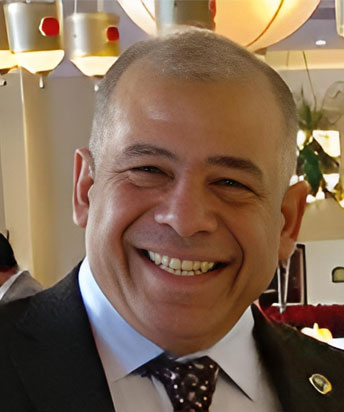
Founder and CEO of IEREK for Research and Knowledge Exchange, Egypt
Founder of COEUS-Institute GmbH-Germany
Swiftly Publish a High-Quality Research Paper
It is with great pleasure that I stand before you today at the 5th International Conference on Advanced Technology for Humanity to discuss the imperative topic of swiftly publishing high-quality research papers. As the proud representative of the esteemed many indexed book series by Springer, iDirect, I am thrilled to introduce this innovative platform that is set to revolutionize the way authors, universities, and experts interact with the world of academic publishing.
In our fast-paced world, the need for rapid, yet high-quality dissemination of research findings has never been more critical. As researchers, we understand the value of timely publication and the impact it has on the advancement of knowledge and the betterment of humanity. Therefore, it is essential to embrace platforms and technologies that facilitate the swift publication of cutting-edge research without compromising on quality.
iDirect, the brainchild of Springer, is precisely such a platform. It has been designed with the aim of streamlining the publication process, empowering authors, and serving as a valuable resource for universities and experts across the globe. With its user-friendly interface and robust support system, iDirect provides a seamless experience for authors, ensuring that their work reaches the right audience in a timely manner...
Mourad Amer, Founder and CEO of IEREK for Research and Knowledge Exchange, Egypt.
Founder of COEUS-Institute GmbH-Germany. I’m also series editors for many book series by Springer!
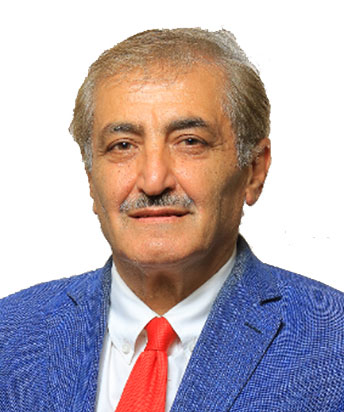
Civil & Environmental Engineering Department
UCI, USA
Roadmap for designing net-zero energy affordable homes
Energy access and green transition are topics of major concern that fit the challenge of sustainable development. Energy efficiency and green construction have immediate impact on energy demand, economics, and environment by allowing lower operating costs of buildings, improving living conditions for their occupants, and potentially lowering carbon emissions for the California. Furthermore, general access to modern energy alternatives is crucial for reducing social gaps between rural and urban areas.
The lecture will identify strategies for creating energy-efficient model buildings are based on the principles of bioclimatic architecture and will include reducing energy loads, water demand and selecting building systems that make the most effective use of ambient energy sources and heat sinks and using efficient equipment and effective control strategies.
Dr. Ayman S. Mosallam is a Professor of Structural and Earthquake Engineering, also a Professor, Materials & Manufacturing Engineering Technology and served as the Director of the UCI Structural Engineering Testing Hall at the Civil & Environmental Engineering Department at University of California, Irvine (UCI). He is a fellow of the American Society of Civil Engineers (ASCE). He is a registered Structural Professional Engineer in the District of Colombia and has more than forty years of experience in affordable housing, materials, environmental, and structural engineering with a particular interest in innovative sustainable building systems and green construction including three- dimensional sandwich panels, bamboo structures, recycled plastics, solar systems, water recycling, efficient cooling system rehabilitation. He is an international leading authority in non-conventional sustainable building systems. Dr. Mosallam is the co-founder of the International Council for Advance Technology for Humanities (ICATH). He is a member of ASCE Construction Institute Materials Directorate (Executive Committee) and a Control Member on the ASCE Structural Composites and Plastics Committee (SCAP). Professor Mosallam serves on the Technical Advisory Board of the International Accreditation Service (IAS). He has published over 500 technical papers, chapters, and reports on structural performance of structural systems and authored, edited and co-edited seven books in this area. He is the author of the ASCE Design Manual for FRP Composites Connections (ASCE MOP 102) and the co- developer of the ASCE/PIC Prestandard Document on Structural Design of Pultruded FRP Composite Structures. He has served on the editorial board of Composites: Part B Journal for over twenty-two years and the Guest Editor for special issues on Infrastructure Applications for Composites for several journals including, Reinforced Plastics and Composites Journal, Materials and Design, Advances in Civil Engineering, Smart Structures, and others. He is the Founder of the Egyptian Green Building Council and the principal author of the first edition of the Green Pyramid Rating System (GPRS). Professor Mosallam is the recipient of numerous prestigious awards including the Outstanding Research Award from the International Conference of Composites Engineering, Best Design Paper Award from Composite Institute, the Industry Impact Award from McGraw Hill, Best Paper Award from SPI, and the Outstanding Engineering Educator of Year Award from American Society of Civil Engineers, The Presidential Award of the Engineering Council, among other numerous national and international awards. He has served as a senior engineering consultant to several US governmental organizations and private corporations including: International Code Council, International Accreditation Service, Flour- Daniel, Dames & Moore, Boeing Company, Alpha Star Corp., US Army Corps of Engineers, US Tanks Division, Ohio Department of Transportation, Oregon Department of Transportation, New York Department of Transportation, John Wayne Airport Authority, Southern California Association of Structural Engineering, Irvine Water Ranch, Linford Corp., Sika Corp., BASF, Advanced Composites Technology, Dover Elevators, and many others. He is a Distinguished Honorary Professor at Future University, and Misr University for Science & Technology in Egypt.
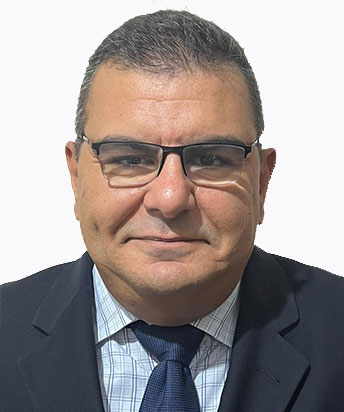
Vice-dean Graduate Studies and Research,
Faculty of Engineering and Technology, F.U.E
Egypt
Behavior and design of concrete with advanced materials under shear and torsion
Torsion and shear failure are brittle in nature, which could lead to disasters. It is a dilemma, which is influenced by many parameters and complex mechanisms. In addition, the use of advanced materials in the concrete industry has increased the complexity of such a design. In this ongoing research investigation, an attempt is made in order to improve the current design codes for shear and torsion including combined loading and advanced materials. Examples are FRP-reinforced concrete, Fiber reinforced concrete, and lightweight concrete. Experimental databases for concrete slabs and beams were tested under one-way shear, two-way shear, and torsion were gathered. State-of-the-art design codes were evaluated using the experimental databases. Recommendations were outlined and discussed. New formulas were proposed for various cases.
Dr. Ahmed Deifalla is a Professor of Concrete Structures and served as the vice dean of graduate studies and research at the Future University in Egypt, Cairo, Egypt. He has over 180 international journal publications indexed under scoups with an H-index of 24 and total citation of over 1700 citation’s. Dr Deifalla was ranked three times in a row as one of the top 2% influential scientists by Stanford University. He is working on the behavior and strengthening of concrete elements under shear, torsion, punching shear, and combined loading, including lightweight concrete, high strength concrete, fibered concrete as well as FRP reinforced concrete. Dr Deifalla investigated various cross section shapes including Tee and Lee beams. In addition, his research areas include Machine learning modeling, advanced materials, numerical modeling and Experimental testing. In 2007, Dr Deifalla graduated from McMaster University with a PhD in civil engineering. He obtained his master of science from Cairo University in 2001.


